
Cusco is famous for places that seem to appear on every traveler’s list: Machu Picchu, the Sacred Valley, Rainbow Mountain, Humantay Lake. And yes, they are absolutely worth it. But beyond the classic routes, there is another side of Cusco that feels quieter, more local, and deeply connected to Andean culture.
That is where the route to Q’eswachaka Bridge and the Four Lagoons becomes such a special experience.
This day trip is ideal for travelers who have already explored the most popular attractions, or for those who simply want to see a different face of the Cusco region. Instead of crowded viewpoints and busy trails, this journey takes you through highland villages, open landscapes, calm lakes, and one of the most fascinating examples of living Inca heritage: the Q’eswachaka Bridge.
Why Choose This Hidden Route from Cusco?
The Q’eswachaka and Four Lagoons route is perfect if you are looking for something authentic, peaceful, and less commercial than the usual day trips. It combines history, nature, photography, local culture, and a sense of discovery.
This experience is especially recommended for travelers who:
- Have already visited Machu Picchu or the Sacred Valley.
- Want a less crowded alternative from Cusco.
- Enjoy cultural landscapes and traditional communities.
- Prefer scenic road trips over demanding hikes.
- Are interested in Inca engineering and Andean heritage.
- Want to see lakes, villages, and mountain scenery in one day.
Unlike routes that focus on one single attraction, this journey feels like a collection of small discoveries along the way. The road itself becomes part of the experience.
What Is Q’eswachaka Bridge?
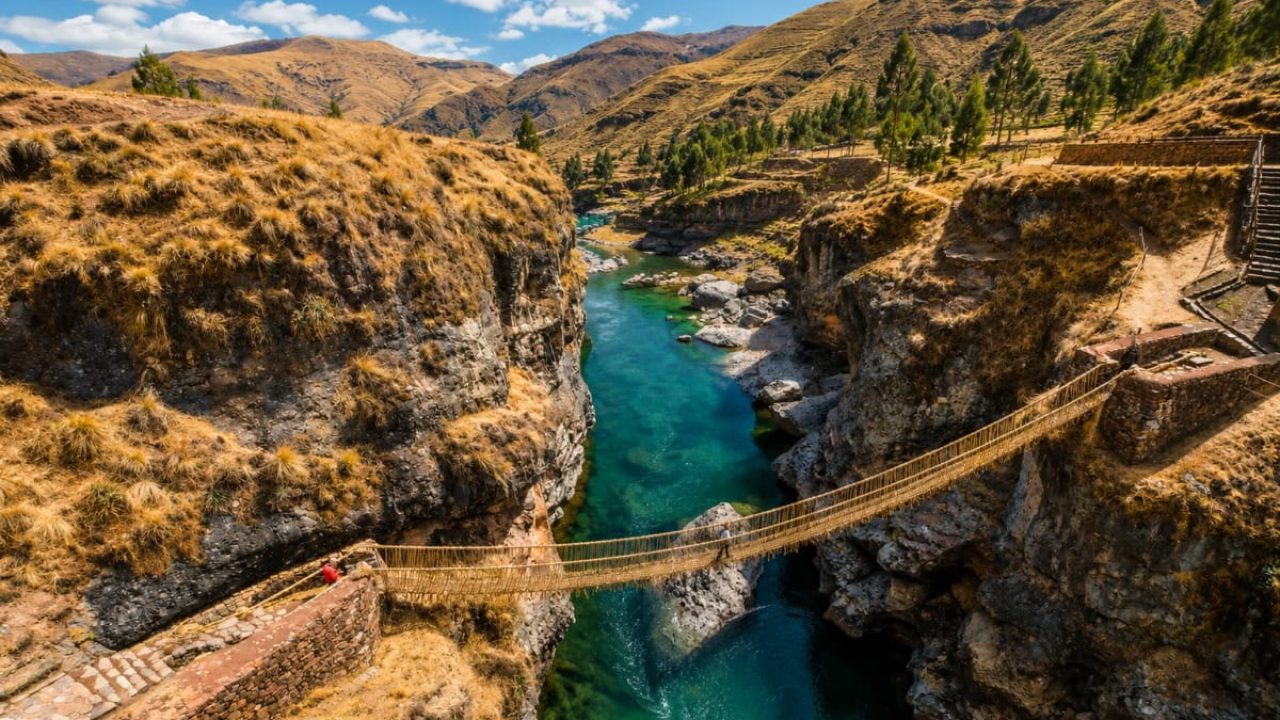
Q’eswachaka is often described as the last remaining Inca rope bridge. Built over the Apurímac River, this bridge is made using traditional materials and techniques that have been passed down through generations.
What makes it so impressive is not only its appearance, but the meaning behind it. The bridge is renewed every year by local communities through a collective process that preserves ancestral knowledge, cooperation, and cultural identity.
For the Incas, bridges were essential. They connected territories, communities, trade routes, and administrative centers across an empire full of mountains, rivers, and deep canyons. Q’eswachaka is a living reminder of that extraordinary engineering tradition.
Standing near the bridge, you can feel that this is not a museum piece. It is a tradition that is still alive.
The Cultural Value of the Bridge
One of the most powerful aspects of visiting Q’eswachaka is understanding that the bridge represents more than architecture. It reflects community organization, respect for nature, and the continuity of Andean knowledge.
The bridge is traditionally made with ichu, a native highland grass. The process requires preparation, braiding, teamwork, and ritual. Local families participate in different stages, creating a bridge that is both practical and symbolic.
For visitors, this is a beautiful opportunity to see how the past and present coexist in the Andes. Q’eswachaka is not simply “from the Inca period.” It continues because local communities choose to preserve it.
The Four Lagoons: A Peaceful Andean Landscape
After or before visiting Q’eswachaka, many routes include the Four Lagoons circuit, one of the most scenic and underrated areas south of Cusco.
The main lagoons usually visited are:
- Pomacanchi
- Acopia
- Asnacocha
- Pampamarca, also known as Tungasuca
Each lagoon has its own character. Some are wide and calm, others are surrounded by reeds, birds, rural homes, and open fields. Together, they create a peaceful route that feels far away from the fast rhythm of the city.
This is not the kind of place where you rush from one stop to another. The beauty of the Four Lagoons is in the atmosphere: the reflection of the sky on the water, the quiet roads, the silhouettes of the mountains, and the feeling of being in a region that still keeps its traditional rhythm.
What You Can Expect During the Day Trip
This is usually a full-day route from Cusco. The day starts early because the distances are long and the experience includes several stops along the way.
The trip is mostly scenic and cultural, rather than physically demanding. There may be short walks near viewpoints, lagoons, or the bridge area, but it is not like hiking to Rainbow Mountain or Humantay Lake.
During the journey, you can expect:
- A long but beautiful road trip through the southern Andes.
- Stops at viewpoints and rural landscapes.
- Time to appreciate Q’eswachaka Bridge and the Apurímac River.
- Visits to several lagoons in the Four Lagoons circuit.
- Opportunities for photography.
- A quieter experience compared to Cusco’s most popular attractions.
- A deeper look into local Andean life.
Because this is a less common route, having organized transportation is especially useful. Distances, road conditions, and timing can make a big difference in the quality of the experience.
Who Is This Route Best For?
Q’eswachaka and the Four Lagoons is a great choice for curious travelers. It is not necessarily the first route most people book when they arrive in Cusco, but that is exactly part of its charm.
This trip is ideal for:
- Couples looking for a scenic and quiet day.
- Families who prefer cultural routes over intense hikes.
- Photographers who enjoy landscapes and rural scenes.
- Travelers interested in Inca history beyond Machu Picchu.
- Visitors with extra days in Cusco.
- People who enjoy off-the-beaten-path destinations.
It is also a good alternative for travelers who want beautiful landscapes but do not want a very demanding walk at high altitude.
Practical Tips Before You Go
Even though this is not a heavy hiking route, you are still traveling through high-altitude areas. It is important to be prepared.
Bring:
- A warm jacket for the early morning.
- Sun protection, including sunglasses and sunscreen.
- Comfortable walking shoes.
- Water and light snacks.
- A camera or phone with enough battery.
- Some cash for local expenses.
- A rain jacket during the rainy season.
The weather can change quickly in the Andes. A sunny morning can become cloudy or windy later in the day, so dressing in layers is always a smart idea.
Why This Route Complements the Classic Cusco Experience
Many travelers leave Cusco with beautiful memories of Machu Picchu, the Sacred Valley, and colorful mountains. But routes like Q’eswachaka and the Four Lagoons add something different: context.
They show that Cusco is not only about famous archaeological sites. It is also about living traditions, rural communities, sacred landscapes, and quiet corners where history is still part of daily life.
This trip helps you understand the Andes in a more complete way. You see water, mountains, roads, villages, and ancestral knowledge connected in one route.
That is why it works so well as a supporting experience during a Cusco itinerary. It does not compete with the classic highlights. It enriches them.
Final Thoughts
Q’eswachaka Bridge and the Four Lagoons is one of those day trips that surprises you because it feels different from the usual Cusco routes. It is calm, cultural, scenic, and full of meaning.
If you want to go beyond the most famous attractions and discover a hidden side of the region, this journey is a wonderful choice. The bridge connects you with Inca engineering and living tradition, while the lagoons offer a peaceful view of the highland landscape.
For travelers who love authenticity, open roads, and stories that are still alive, this hidden day trip from Cusco deserves a place on the itinerary.
If you would like to experience this route with organized private transportation, you can also explore our Q’eswachaka Bridge and Four Lagoons tour here: https://cuscoprivatetransport.com/tours/qeswachaca-and-four-lagoons/